
Every country at ITB Berlin has beautiful landscapes, welcoming people, and a compelling story. Standing out requires more than showing up with the right visuals.
Once a year, the tourism industry gathers in one hall. ITB Berlin, WTM London, FITUR Madrid, IMEX Frankfurt. National tourism boards, regional destinations, resort chains, and travel operators all show up with the same fundamental proposition: come visit us, we’re worth it.
And they all do it well. The stands are impressive. The imagery is stunning. The staff is warm and multilingual. Which is exactly the problem. When every destination is beautiful, beauty stops being the differentiator.
Recently we produced a destination marketing activation at ITB Berlin for a national tourism brand. Working alongside the client and their agency partners, we helped extend the brand’s presence beyond the pavilion into the city itself. In the process, we saw firsthand what makes some destinations cut through at these fairs, and what makes others blur into the general noise no matter how much they spend.
Four principles for any tourism board, DMO (Destination Marketing Organization), or destination brand preparing for the next major trade fair.
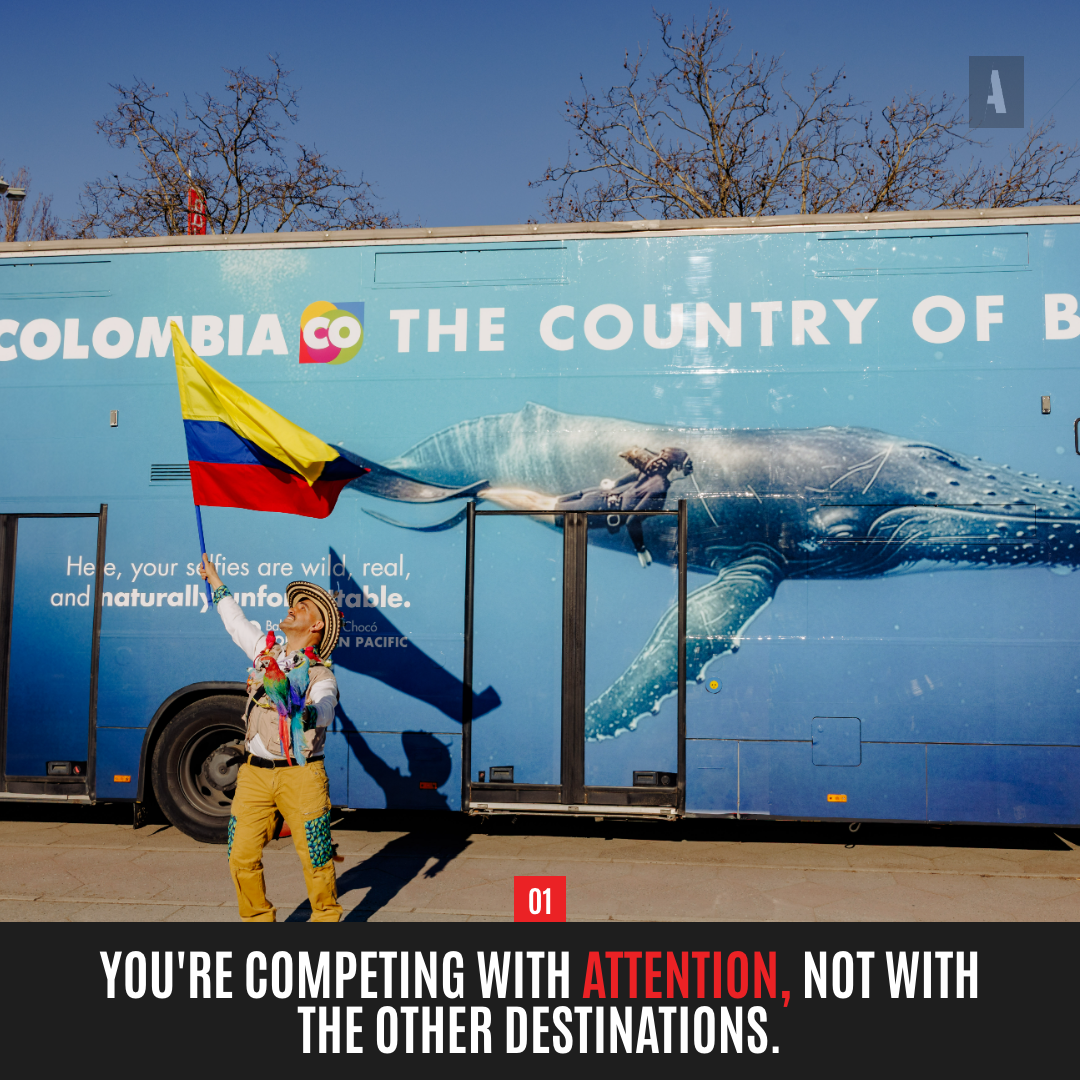
1. You are not competing with the other destinations. You are competing with attention.
The instinct at a tourism fair is to benchmark against neighboring countries. What is Peru doing? What is Portugal doing? How are we positioned versus them?
It’s the wrong frame. The trade professionals walking that hall are seeing hundreds of destinations across three or four days. They are exhausted, overstimulated, and running on coffee and canapés. Your competition isn’t the destination in the stand next to yours. Your competition is the moment two minutes after they leave your stand, when the next country makes them forget what you told them.
The job is not to be better than your neighbor. The job is to be memorable enough to survive the walk to the next stand. That changes everything about how you design the message, the pace of the interaction, and what you leave in someone’s hand or phone.
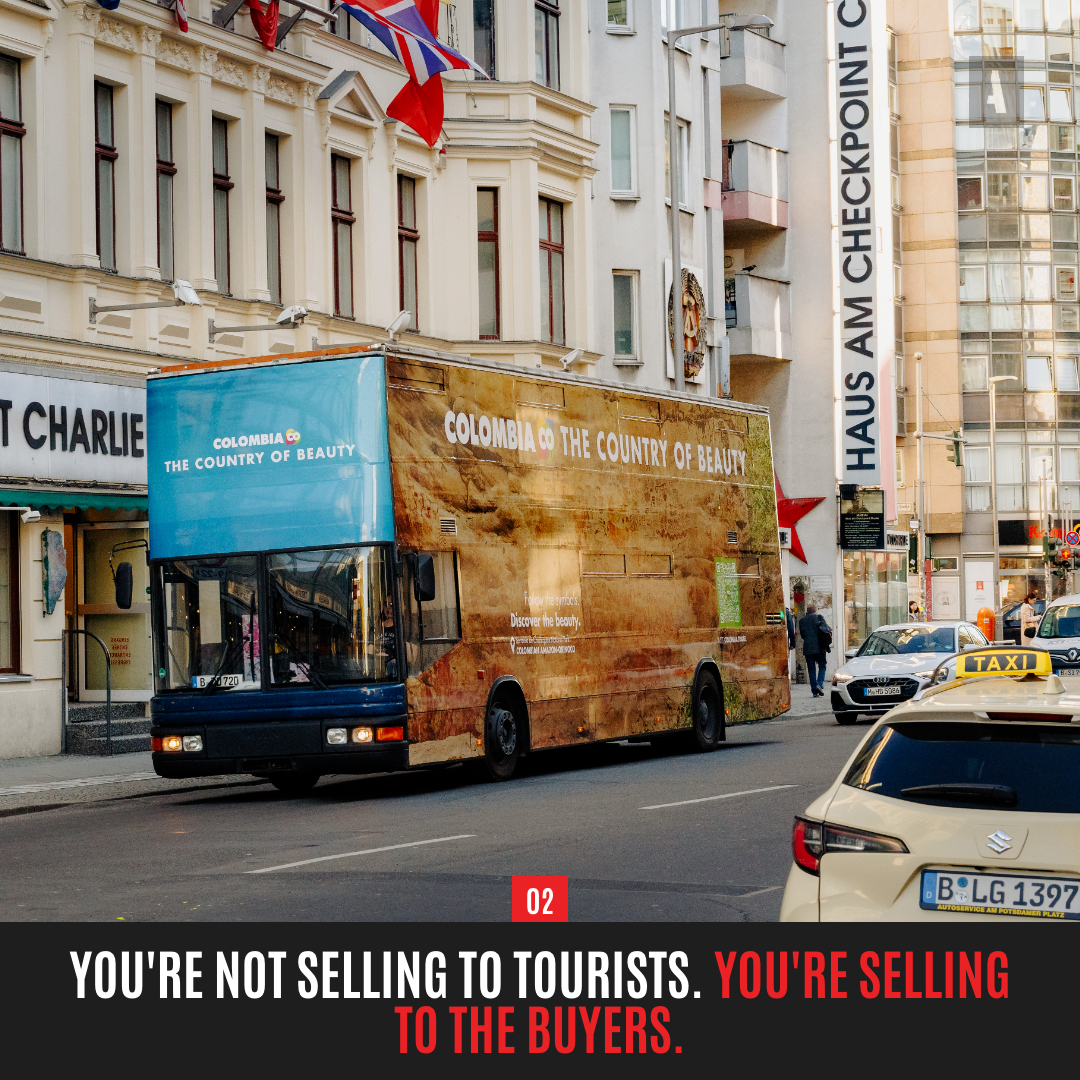
2. The audience isn’t tourists. It’s the trade.
Trade fairs are B2B events. The people walking that pavilion aren’t planning their next holiday. They are tour operators, travel agents, wholesalers, MICE buyers, journalists, and content creators deciding which destinations to feature in their catalogues, their itineraries, and their coverage over the next twelve months.
That audience is not moved by the same messaging that moves a tourist on Instagram. They are professionals evaluating whether your destination is commercially viable for their business. They want to know about air connectivity, hotel infrastructure, safety, permits, ease of ground operations, and what your local partners actually deliver on.
The destinations that stand out at these fairs are the ones that speak to this reality directly. They lead with operational credibility, not romance. They still tell the story, but they tell it in a language a buyer can act on.
3. Extend the destination beyond the pavilion
Here is where most destinations leave real opportunity behind.
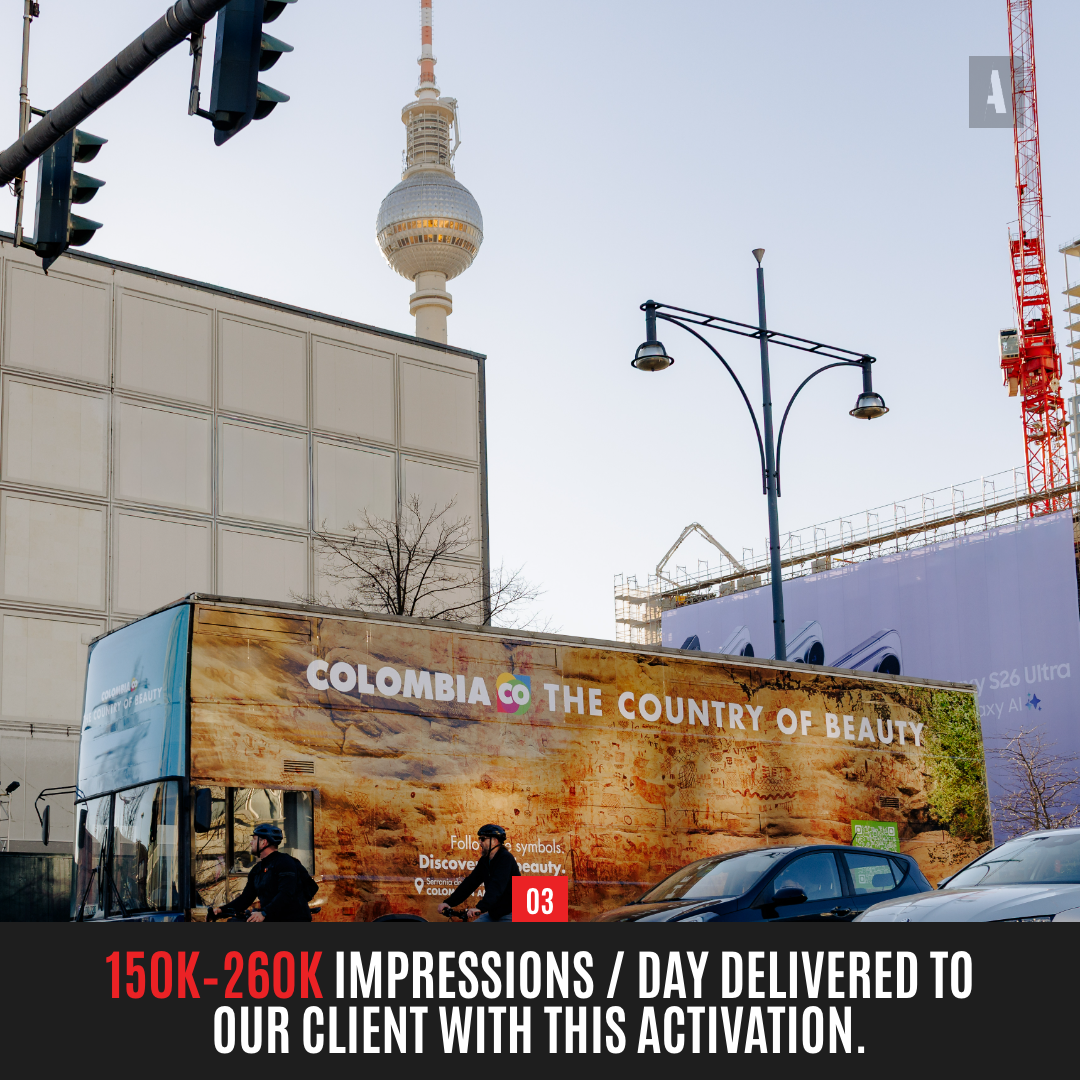
The city hosting the fair is your best media buy of the week. Berlin during ITB. London during WTM. Madrid during FITUR. These cities move millions of people through their commercial and tourist zones during the fair, including large portions of the trade audience walking from hotels to venues, from dinners to meetings. They are your target audience, off the clock, receptive.
We’ve seen destinations achieve 150,000 to 260,000 visual impressions per day through well-planned activations in the host city. That is orders of magnitude more than the pavilion delivers. And it reaches the trade audience in a context where they are not being sold to, which is when the message actually lands.
The activations don’t have to be complex. A well-branded mobile support, a takeover of a specific cultural venue, or a curated evening in a photographable space can outperform an expensive pavilion enhancement. The key is that whatever you do outside the fair is designed with the same strategic care as what you do inside it.
4. Local execution is the credibility test
Here is the paradox at the heart of destination marketing: you are trying to convince the trade that your country is easy to work with, while operating in a country that isn’t yours.
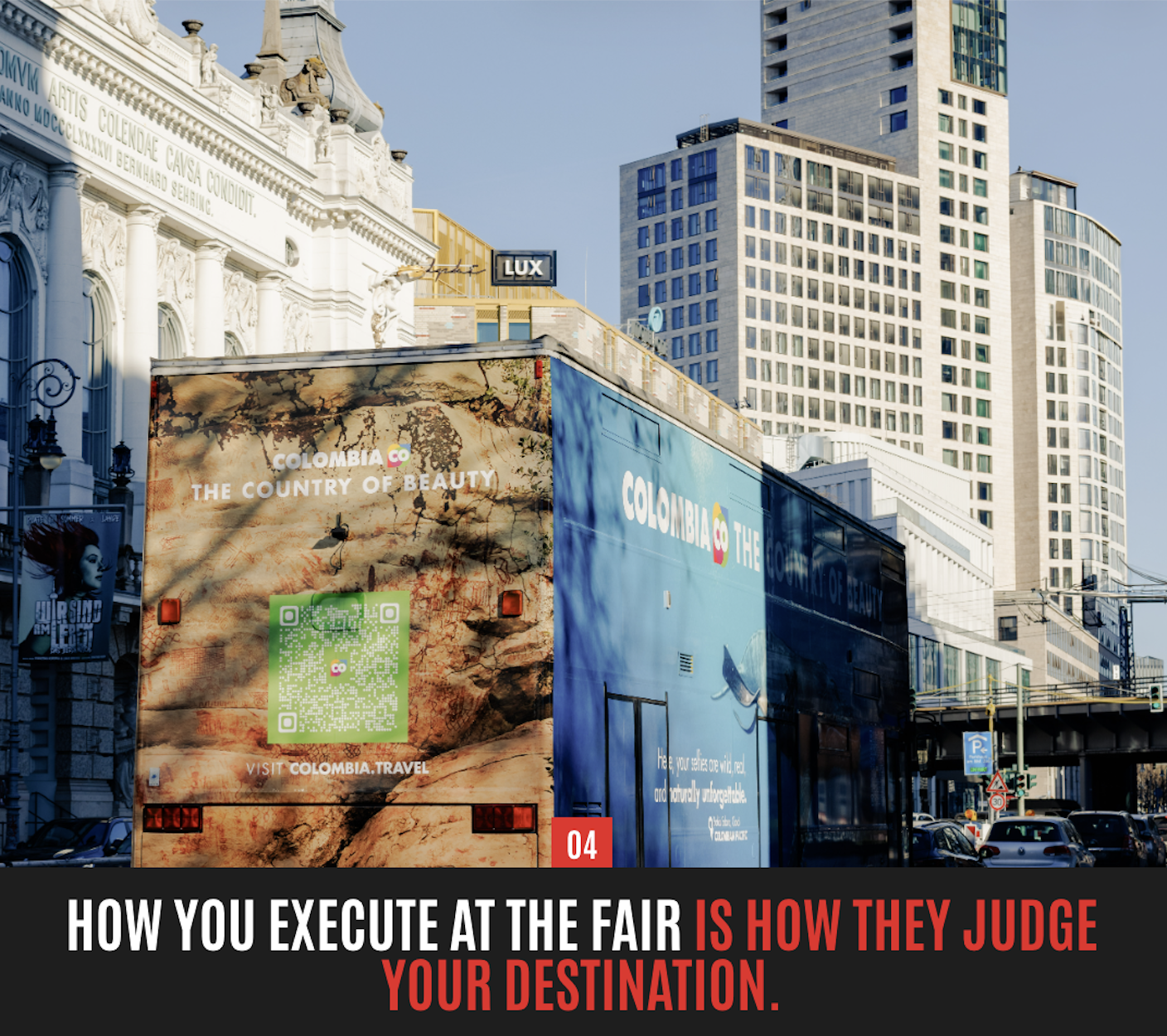
If your activation in Berlin, London, or Madrid is well-executed, on time, and delivered smoothly, it says something about your country by extension. The trade thinks: if they can pull this off in Germany, they can pull off my group in their own country.
If the activation is a mess, the opposite happens. Late deliveries, permit issues, staff who don’t know their brief, timing that slips: every one of these tells the trade audience something they weren’t supposed to hear.
The execution of your presence at the fair is itself a demonstration of the operational competence of your destination. Which is why the choice of local production partner is not a logistics decision. It is a brand decision.
The point that ties everything together
Destination marketing at major tourism trade fairs is one of the highest-stakes exercises a national brand does all year. The audience is small, expert, and hard to reach. The budgets are significant. The window is narrow.
The destinations that succeed are not the ones with the most beautiful landscapes. They are the ones that speak the language of the trade, extend their presence beyond the fair, and execute flawlessly on foreign soil.
Everything else is just a nice stand.
Planning your next tourism trade fair and thinking about how to make it work harder? Let’s talk. We help.