

The product sits in half the kitchens in the country. Our job was to make people stop and pay attention as if they’d never seen it before.
An Asian brand was launching in New York with an everyday object most people already own and wanted a launch that would land in the most overstimulated city in the world. How do you build an activation around something nobody considers exciting? Here’s what we learned.
1. Find the role the product plays that nobody talks about
Every commodity has an obvious function and a hidden one. The product was an ice machine. The obvious function is making ice. The hidden one is what good ice does to a drink: it doesn’t dilute it or ruin what a bartender crafted. So we stopped selling the machine and started selling what it enables a drink that stays as the bartender intended.
2. Build a world, don’t show a feature
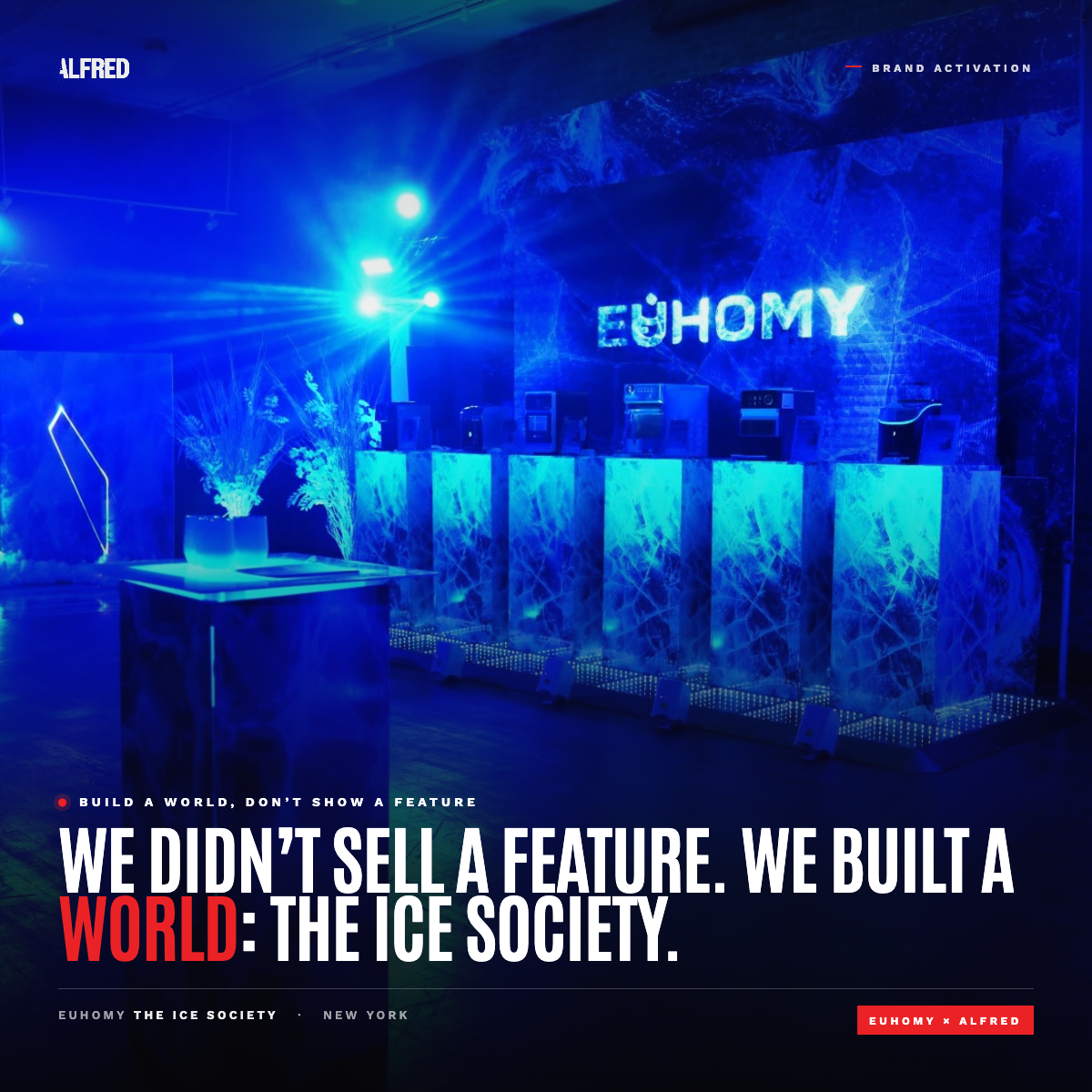
Once you have the hidden function, resist the urge to explain it. We built The Ice Society, a tongue-in-cheek secret society for people who take their drinks seriously. The product became the key into the club. That turned a functional benefit into cultural code because functional differentiation alone is too small to carry the conversation.
3. Stage the product as a totem, not a sample
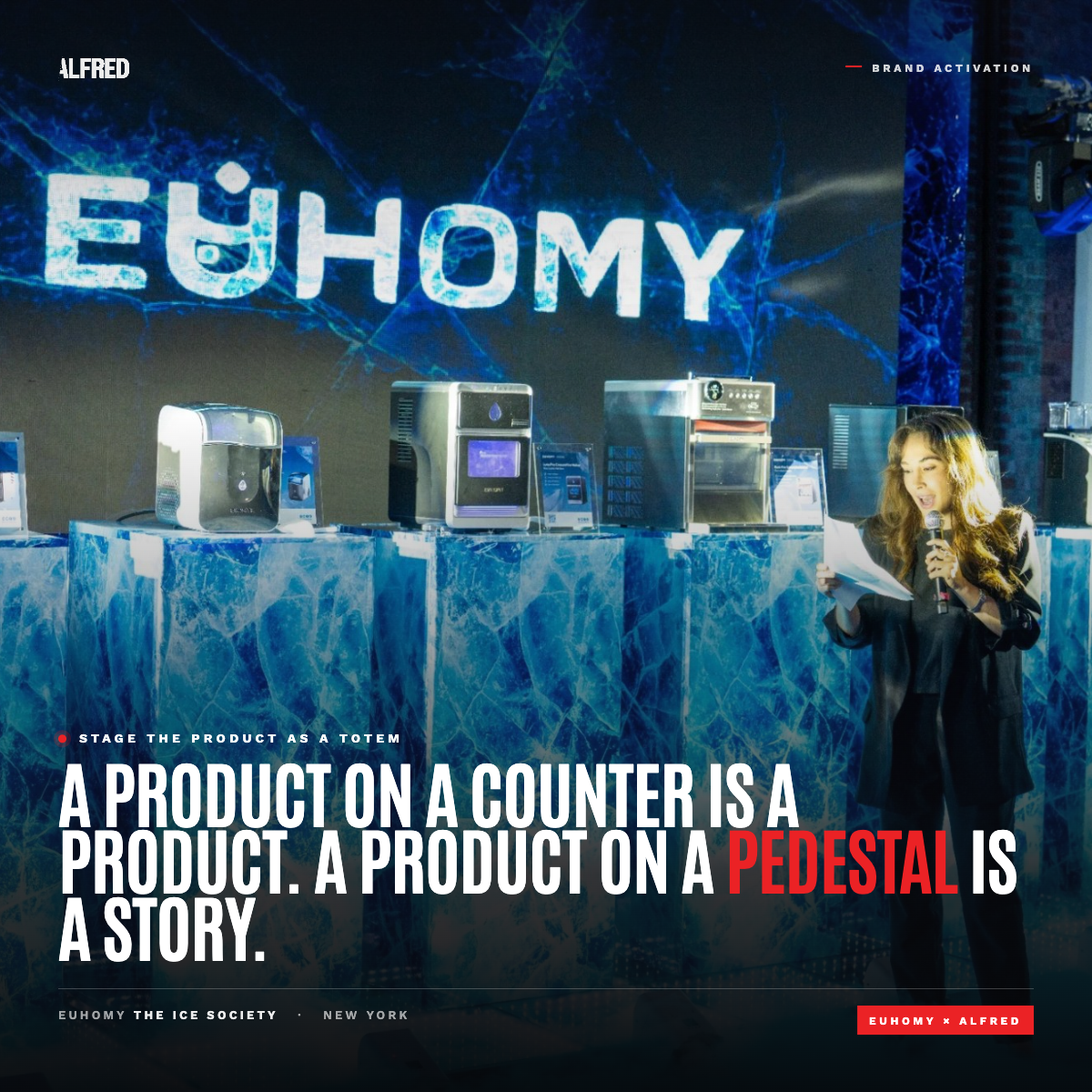
Where the product lives in the room dictates how people read it. We didn’t put the machines on a counter; we staged each as an illuminated totem individually lit, isolated, treated like sculpture, appearing one by one like an exhibition. A product on a counter is a product. A product on a pedestal is a story.
4. Anchor the experience to an expert who validates it
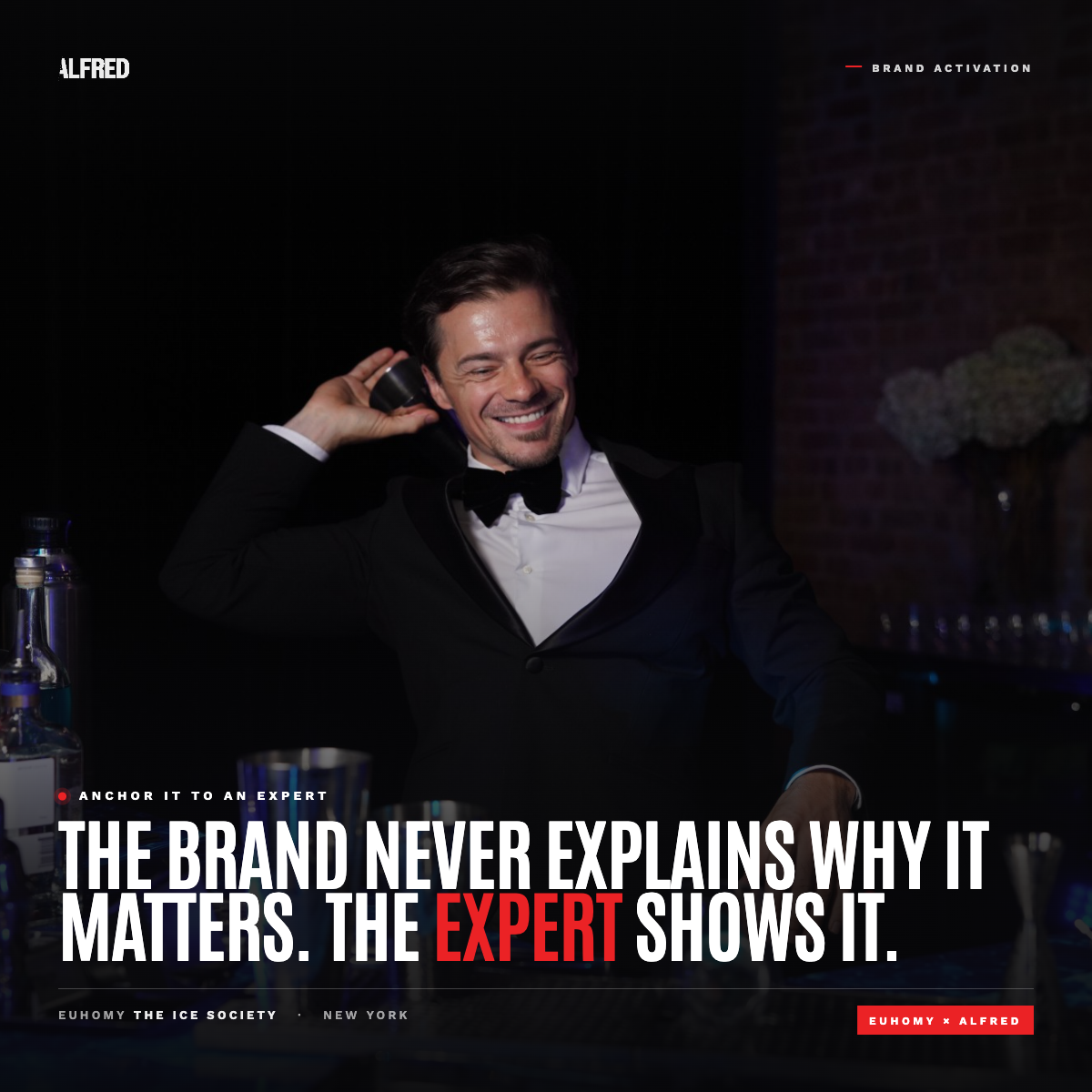
When you ask people to believe a familiar product is suddenly interesting, you can’t be the one making the claim. Our voice was a mixologist. He didn’t pitch the machine he used it. The audience watched a craftsman choose this tool over every other. Someone the audience already trusts should demonstrate it, not the brand.
5. The hardest discipline: not making it gimmicky
When the product is plain, the instinct is to layer on theatrics turning an ice machine event into something out of Frozen. We didn’t, on purpose. The visual language stayed restrained. It felt expensive because it felt confident, and confidence means trusting the idea is strong enough not to need decoration.
6. The principle that holds the others together: the team
Everything above is theory until someone executes it under pressure, in a foreign city, on a deadline. Producing for an Asian client launching in the US meant the brief lived in three cultural languages before it became an event. The lighting designer, the mixologist, the printer, the venue manager every link reading the same script. That happens because the team is good: fifty silent decisions a day to protect the story. Creativity gives you the idea. The team keeps it alive between brief and execution.
A note for any brand sitting on a “boring” product
If your product feels too familiar to deserve a launch, you’re probably wrong. The strongest brands often have the most ordinary products: coffee, sneakers, bottled water, soap. The product was never the limit. The framing was. Nothing is more ordinary than ice and nothing is more capable of ruining or saving a good drink.
Planning a launch for a product the market thinks it already understands? Let’s talk. We help.
Jimena, producer at Alfred